

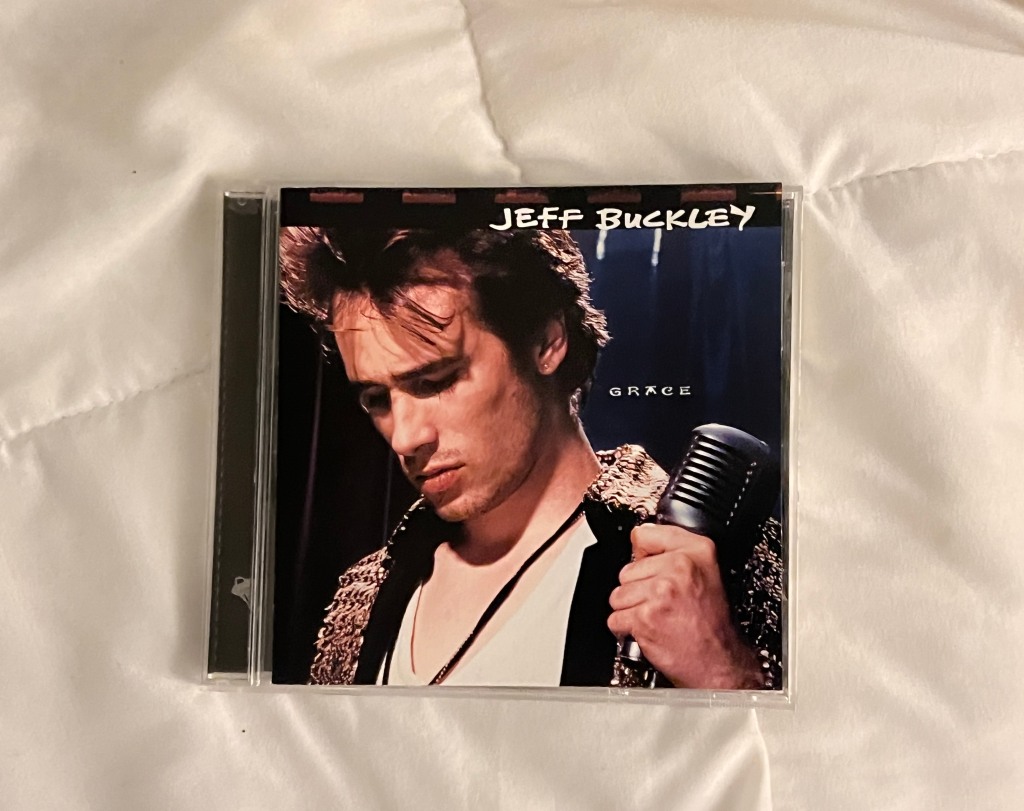
Jeff Buckley’s singular album, Grace (1994), introduced the world to his talent. Although his career was cut short in 1997, the second unfinished album My Sweetheart the Drunk, and live recordings like Live and Sin-é, are still played by listeners.
By: Itzel Gutierrez, Social Media Executive
Jeff Buckley’s essence was distinct from any other musician’s, often tying his lyrics to real-life experiences and how that shaped both his music and his personal journey. Growing up with an absent yet well-known father, Tim Buckley, Buckley’s goal was to make a name for himself independent from the legacy that his father left.
Nearly three decades after his death, director Amy J. Berg captured Jeff Buckley’s life through the voices of his mother, Mary Guibert, and acquaintances like Aimee Mann, Ben Harper, Rebecca Moore, and Joan Wasser in her 2025 documentary It’s Never Over, Jeff Buckley. Though decades have passed since his death, Buckley’s influence continues to inspire musicians, and his lyrics still resonate deeply with listeners.
Buckley began his career at Sin-é, a small Irish cafe in New York City, where he covered songs from influential artists such as Nina Simone, The Smiths, while also finding inspiration from the Qawwali music of Nusrat Fateh Ali Khan. These influences pushed him to experiment with a wide range of vocal techniques and styles.
As his audience grew — often covering the streets of New York — Buckley signed with Columbia Records, where he released his four-song EP Live in Sin-é, which was followed by his first full-length album, Grace. The title itself depicts exactly his motto in life.
“Grace is what matters in anything—especially life, especially growth, tragedy, pain, love, death. That’s a quality that I admire very greatly. It keeps you from reaching out for the gun too quickly. It keeps you from destroying things too foolishly. It sort of keeps you alive.” Buckley said in archived footage from 2004 documentary Amazing Grace: Jeff Buckley.
Despite gaining a larger audience and getting recognition from idols, including members of Led Zeppelin, the film reveals that Buckley began to feel stuck and lost by the pressure to live up to his debut album.
The documentary beautifully portrays the highs and lows of fame — showing how it can both make and break you. For Buckley, music was always about connection, yet the pressures from the spotlight and fame threatened to pull him away from that purpose.
The film’s simplicity and story’s complexity mirrors Buckley’s music — direct, adaptive, and emotionally raw. The anecdotes in the film highlighted specific traits that defined Buckley, making them both relevant and impactful. Alongside interviews and anecdotes from friends and family members, Buckley’s own interviews, journal entries, and doodles gave viewers a more intimate glimpse into his life and mind.
Berg successfully balanced admiration with honesty, showing the reality of being under the spotlight. Throughout the documentary, Buckley’s music was oftentimes in the background of interviews with his friends and mother — highlighting how his lyrics connected with specific moments in his life. While never explicitly explained, the viewer was able to understand the roots of his lyrics and recognize the deeper meaning behind his music. Rather than spelling everything out, Berg’s choice to not completely dive into the music yet find a way to compliment the lyrics to the interviews was admirable to say the least.
The documentary did not feel like a simple mundane biography or summary of Buckley’s life. Instead, it invited the audience to experience his story as though Buckley himself were telling it. Glimpses of his journal entries, voicemail messages left to friends and family and his last words, were an intimate yet pivotal part of the documentary. One especially moving moment came when a voice mail that he left for his mother the day before his passing was played — I caught a glimpse of the audience wiping the tears from their faces. Viewers of all ages left not with just more knowledge of Buckley’s life, but with a deeper understanding of the complexity of his story.
“It’s Never Over” was more than a documentary — it was set out as a reminder of the timelessness of art and the importance of self-discovery. Berg did not just introduce us to Buckley’s story — she gave us the opportunity to feel it. Having been a fan for approximately six years, I feel strongly in saying that this documentary gave Buckley the ability to vocalize his story, an opportunity that the artist never had.
 Waubonsee Weekly
Leave a comment