

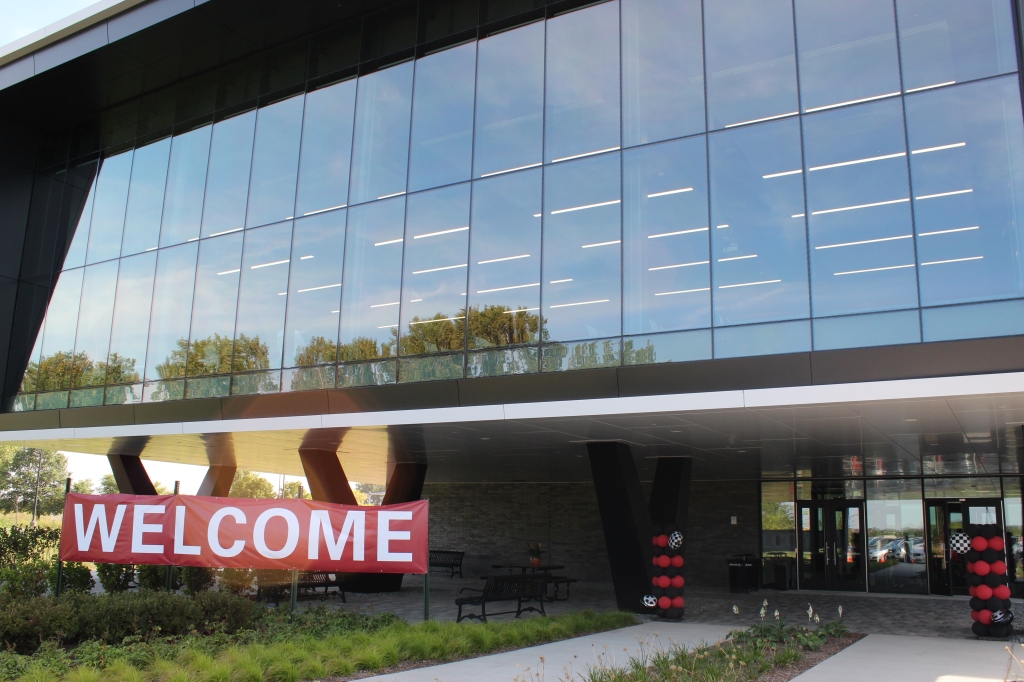
The open house event took place from 4 to 7 p.m and hosted a variety of festivities such as food trucks, RC Car racing and a variety of trinkets for attendees to take home. The main entrance of the building was equipped with a welcome banner, balloons and the large WCC letters used around campus.
By: Kevin Sigrist, Editor-in-Chief
On Friday, Sep. 12, 2025, Waubonsee Community College hosted a ribbon cutting ceremony and open house event for the newest addition to the Sugar Grove Campus, the Technical Education Center (TEC). The building, which cost around 60 million dollars, aimed at developing a far greater space for students interested in the Automotive Service Technology, Automotive Collision and Refinishing Technology and Welding Technology programs. With the opening of the TEC, Waubonsee has enrolled 750 students in these programs for the fall 2025 semester.
The day of festivities began with a ribbon-cutting ceremony, which was attended by the college’s board of trustees and a variety of local elected officials, including mayors and trustees of the college’s municipalities as well as state representatives and congressmen. The open house event took place from 4 to 7 p.m. and included a full walk through tour of the 100,000 square foot building, various food trucks and free food, face painting and demonstrations of new technology.
The event also saw attendance from students currently in the automotive and welding programs, professors from across the college, staff and interested residents. A variety of Waubonsee’s sports teams all volunteered and were placed around the building offering trinkets, welcoming guests or running different activities for attendees.
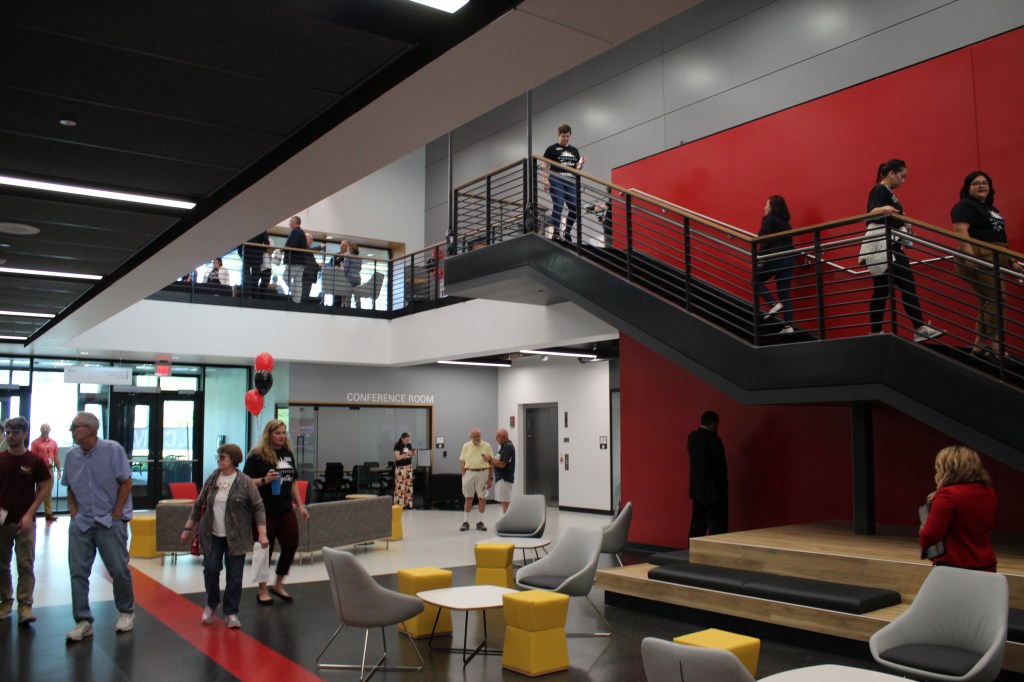
The main lobby of the TEC is home to a variety of sitting and study locations for students and visitors alike. During the open house event, this area was utilized as an information hub, with staff guiding visitors and giving them maps.
This event was a long time in the making. From conception to creation, the addition of the TEC took about three and a half years, with the actual construction process taking place over roughly 18 months. President of Waubonsee, Dr. Brian Knetl, reflected on what this event means and the work it took to get here.
“It feels great. It’s the work of a lot of people, from past presidents, faculty and students. And it really, truly was that collaborative effort of all of those people, from our architects, our construction company and everybody else offering input to really get it done. Being able to be the president at the time when a building like this opens just makes me feel exceptionally proud to be a part of it, but it feels really good to be able to provide something like this to our students and to our communities,” Knetl said.
Beyond being a new and large space for students to continue their academic journeys, the TEC offers countless opportunities and unique learning experiences that are not as accessible in other colleges.
“Students in this business and in the programs in this building are going to be learning in one of the, if not the, best facilities of its kind in the area with the most recent technology and future technology,” Knetl said. “So when they leave here, they are going to be going into the workforce prepared to be successful, and I think that’s what this does for students. Preparing them for the workforce is one of the biggest benefits of this building.”
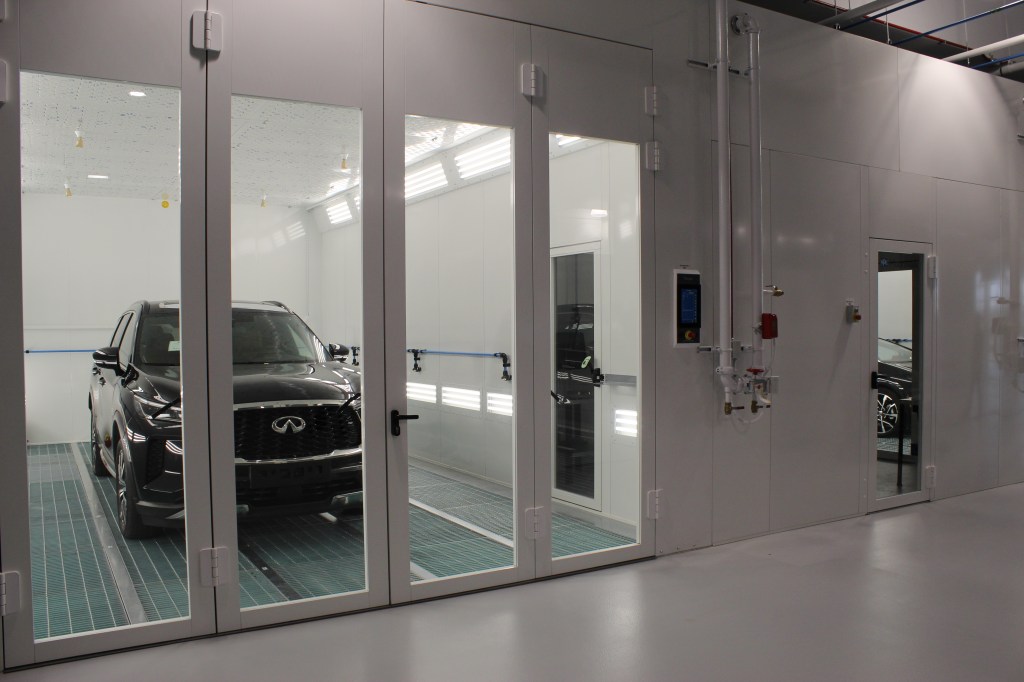
On the second floor of the building, the TEC has collision and paint labs. Both of these labs are equipped with frame machines that are capable of providing quick measurement assessment.
Knetl and the Waubonsee staff are not the only ones excited about the new building. Current students and alumni alike are very excited about the new opportunities the TEC and the technology within it will offer. Waubonsee graduate and Southern Illinois University student Josh Stover, who spent two years working and learning in the automotive program at Waubonsee’s previous shop, discussed the benefits of the new location and how it is an improvement from his experience.
“It’s crazy how much space there is in this shop compared to the old shop. In the last shop, whenever you pull in a car, everyone else tries pulling in cars, and you would get blocked in there. You’d be stuck there for a few hours past when you were trying to be there because people would be behind you with other cars. But with this shop, I don’t foresee any issues with that. It looks like everything is pretty free and open,” Stover said. “I really like the lighting in here. The old shop is very dim and kind of hard to see in some places, but the lighting here is really good.”
Beyond the logistical benefits between the new and old buildings, the TEC also has a lot of variety in its labs and available technology. On top of standard offices, restrooms and classrooms that all buildings at Waubonsee offer, the TEC includes several incredibly large garages, a large tool crib, collision and paint labs, a fabrication lab, 18 welding booths in the new welding area, a computer lab and four different specialty labs for automotive students: the light duty diesel lab, the transmission lab, the gas engine lab, and electric vehicle/hybrid lab.
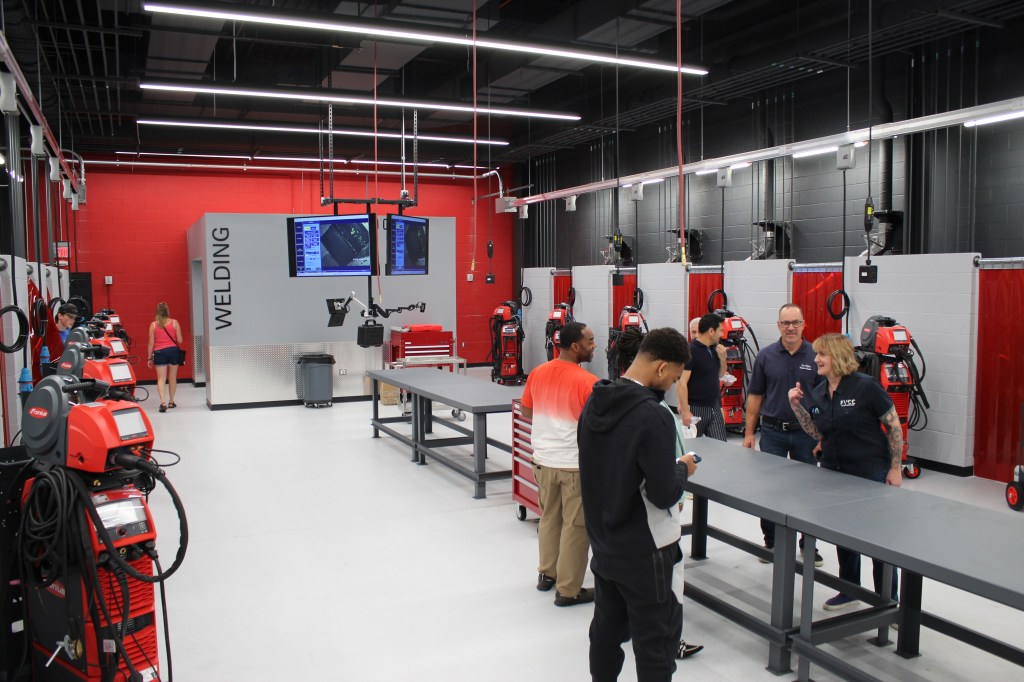
While not as extensive as the Automotive sections of the building, a state-of-the-art welding lab is available on the second floor. The room is home to 18 welding booths, two of which are extra large to fit more than one student.
Amongst the specialty labs, the transmission lab holds a piece of technology that many students are quite excited to use. Jacob Merrill, a second-year automotive student at Waubonsee, is looking forward to using the Transmission Dynamometer, an automotive device used to measure the amount of torque or rotational speed coming from the power transmission between components.
“Well, one of the things I look forward to the most is something we already have, the [Transmission Dynamometer] in the [transmission lab]. I think that’s a huge opportunity to actually show how the learning has affected us; how we’re able to tear down the transmission, put it all back together, and have it work,” Merrill said. “I feel like that’s a good opportunity for students to actually show off their work. Especially in the corner with the [Advanced driver-assistance system] lab, with all the calibrations and stuff like that. That’s something a lot of facilities and schools in the state don’t have access to, so I feel like being able to learn there, too, when it’s up and running, will be a really good learning experience.”
Stover was similarly excited to see the new technology in play and views the Transmission Dynamometer as a pivotal and useful tool for students learning about building working transmission systems.
“I’m excited to see the [Transmission Dynamometer]. It’s not set up at this point, but the transmissions class is going to be able to rebuild the 4L60Es that they have in there and actually run them on the [Transmission Dynamometer] and make sure that they work both before and after they turn them down and rebuild them,” Stover said. “That’s really good to see that their teardown was successful and rebuilding it – they checked all their clearances, and everything was to spec. So I think that’s really cool to actually be able to see that function after they rebuild it.”
The development of the TEC is one of the biggest installments Waubonsee Community College has ever made to any of its campuses, but despite the sheer size and scale of the addition, Knetl is not worried about handling the logistics.
“I think this is one of those instances where, rather than just being a change, it really is an improvement. I mean, it’s a much larger building, so as a college, we’ve got a bigger footprint to take care of to make sure that it stays clean and safe. So there are some of those additional challenges with just the sheer size and scope of it, but in terms of what it provides for the college, the opportunities it provides students to get out into the workforce, there are no drawbacks to that,” Knetl said. “What’s really great about the way the college operates is, from conception to completion, it takes three years, so the college prepares for what the additional footprint is going to cost the college and how it’s going to need to be maintained. And, you know, we are ready to take on all of that. We’re prepared and planned, and I have everything in place to make sure that this building is nothing but positive for our students and for our community.”

Placed in a unique spot on campus, the TEC is abundant with windows that display beautiful views of campus that many may be unfamiliar with. The building sits right next to the intersection of Route 47 and the south entrance of campus, allowing passersby to see the new building easily.
The workforce preparation and experience is not just a sentiment held by Knetl, but one that the students highly value as well. Being able to work on other projects and encounter new problems is a part of the automotive industry that Stover finds to be incredibly important.
“This will definitely be much better for students going forward. There seems to be a lot of room for people to actually do the jobs they want to do here, especially with being able to bring in their own side projects and work on that here, and just learn more about issues you actually see in the field. In a lot of places, they work on cars that are brand new, or students have torn them down and rebuilt them in the past, and you don’t get to see a lot of issues you’d combat in the field like rust, sunk bolts, broken bolts or anything like that,” Stover said. “When students have the ability to bring in their own projects, they’ll encounter issues just like they would in the field, and it ends up being that they’re much better prepared when they go to work in the field than they would have been if they hadn’t gotten the opportunity.”
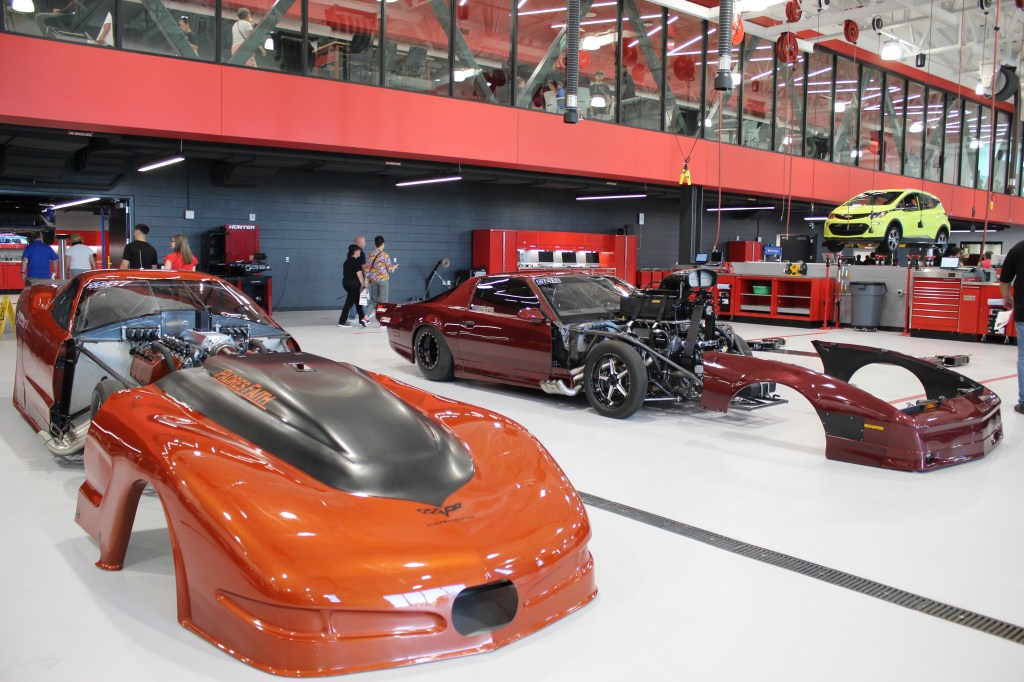
A variety of cars, assembled or disassembled, were placed around the building to demonstrate the available technology. Some students brought in their own personal projects to display at the event.
Despite the building being heavily oriented towards students in the specific programs, the TEC still offers a variety of work spaces and features that are available to all students.
“If you’re a student at this college, this building is available to you, and we have spaces. You can see, looking out here, places for students to sit and relax and study. It’s a quiet space, so students should come over and do that. We’ve designed it with a lot of windows into the workspaces, so students can come and see what other students are doing and how they’re learning,” Knetl said. “It puts a premium on hands-on experiential learning, and whether you’re in auto body tech, auto collision, welding or in a field with the arts or business, that hands-on experiential learning is key, and this is just a very vivid, amplified version of them.”
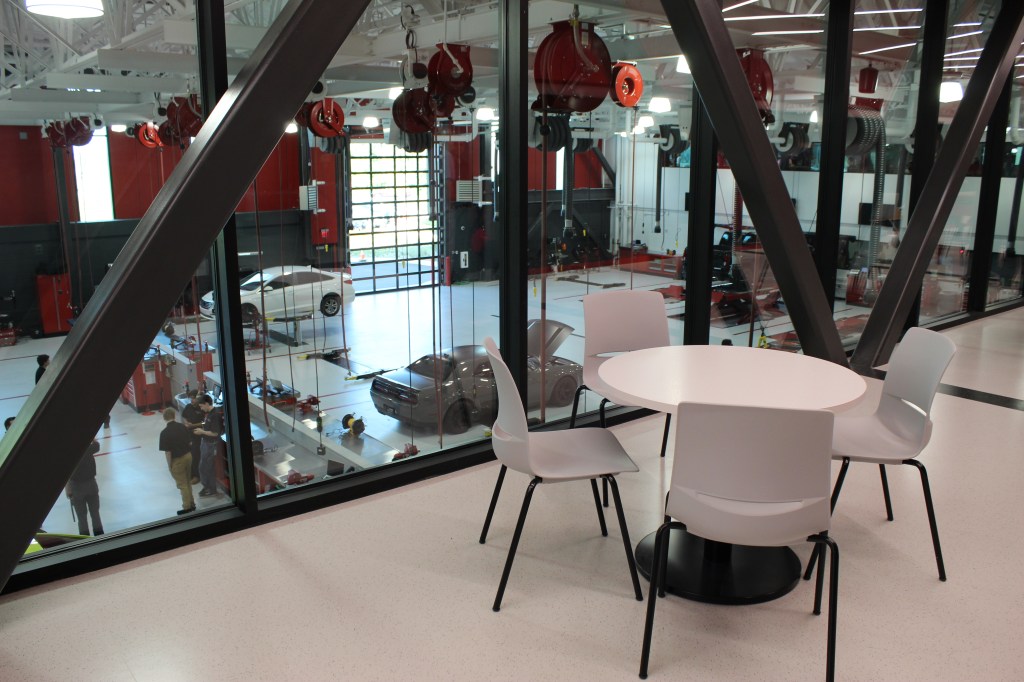
The TEC is rampant with viewing areas for the work being done in the various labs and garages. Students do not have to be a part of the specific automotive or welding programs in order to come to the building and study or watch the work being done.
 Waubonsee Weekly
Leave a comment